“Bulk materials & Process”
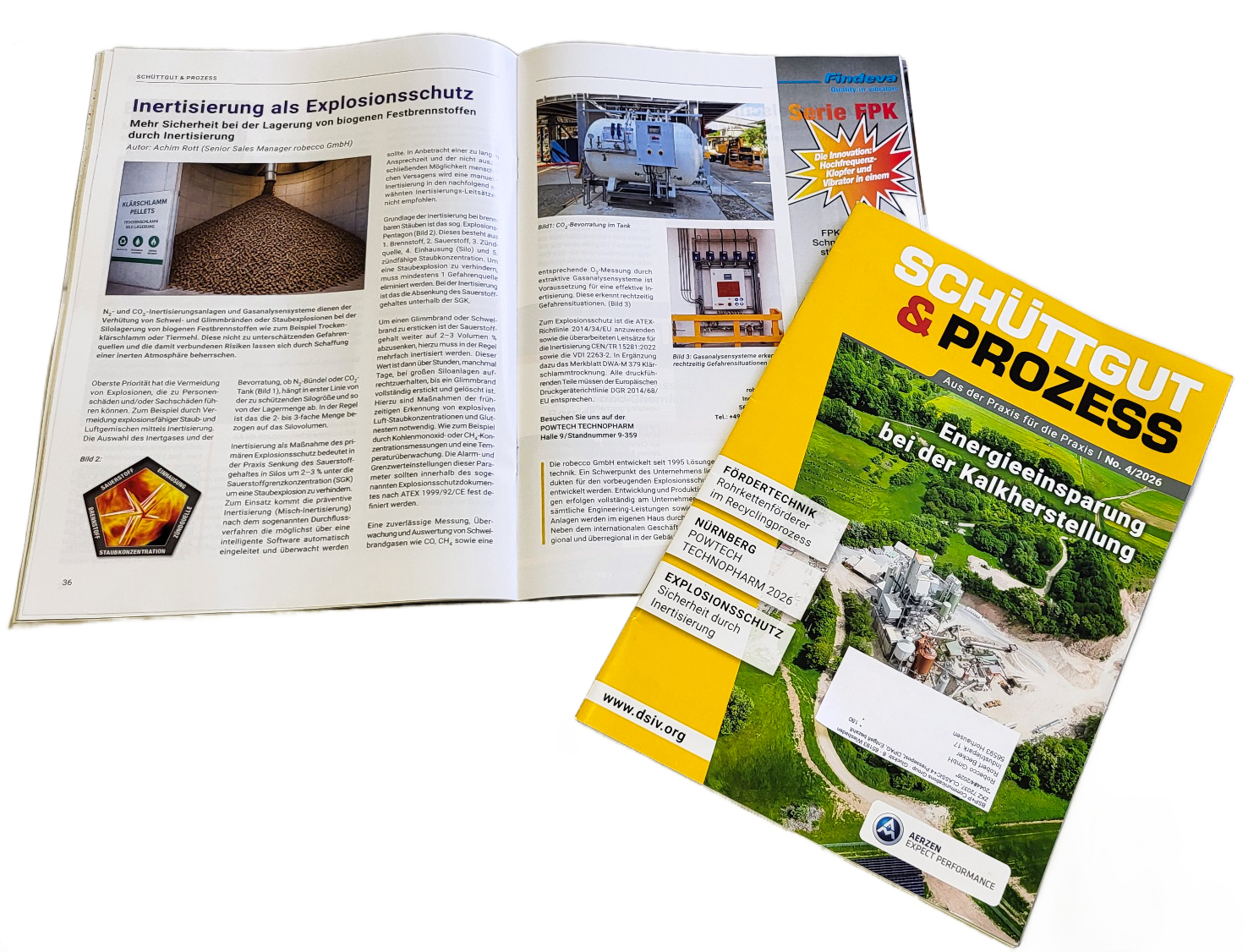
Issue4/2026
Author Achim Rott, Senior Sales manager robecco
PBP_inerting-as-explosion-protection-0.2026_26091_robecco-1.pdf

Inerting as Explosion Protection
Greater safety in the storage of biogenic solid fuels through inerting
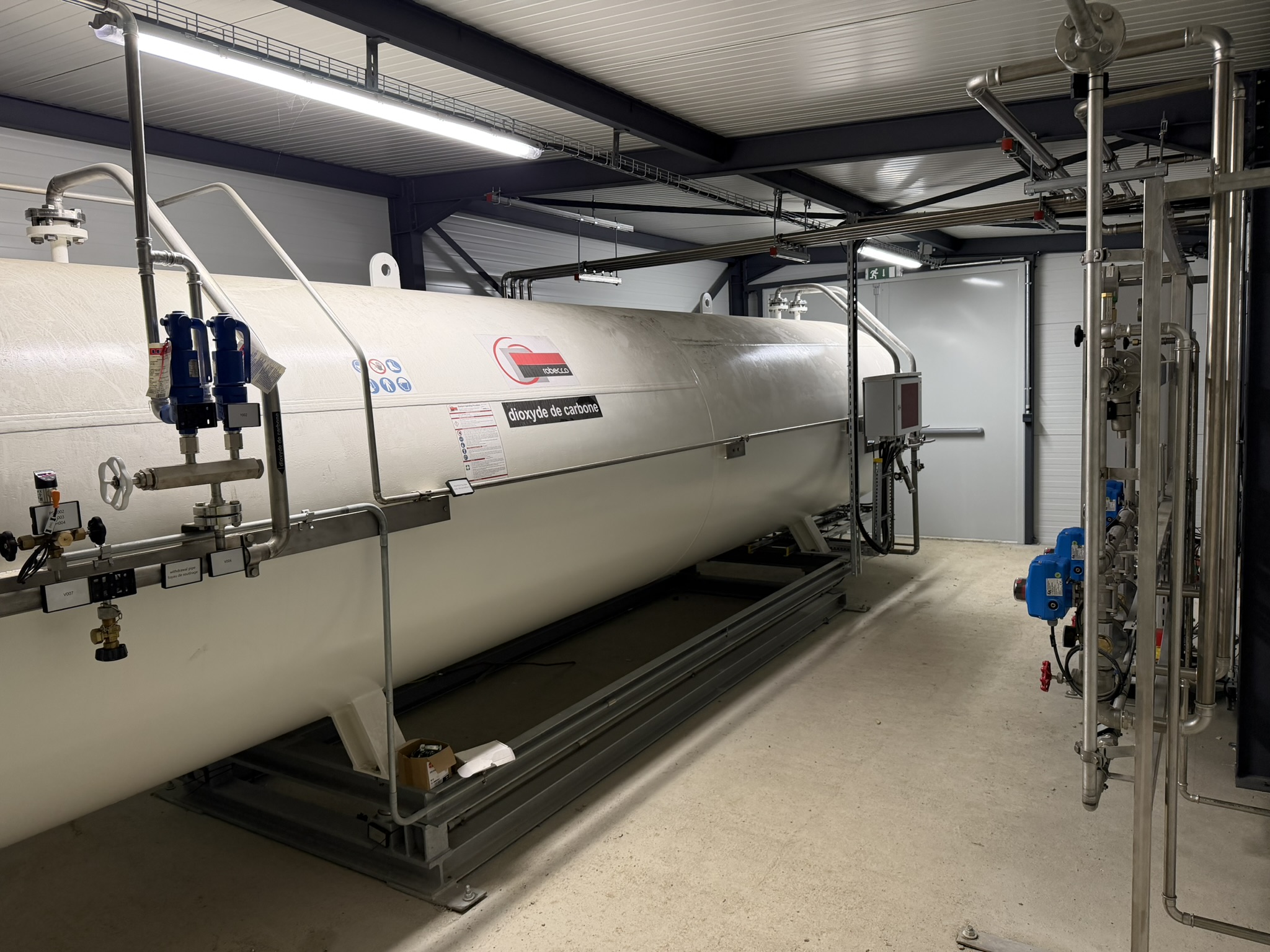

N2 and CO2 inerting systems and gas analysis systems serve to prevent smouldering and glow fires or dust explosions during the silo storage of biogenic solid fuels such as dried sewage sludge or animal meal. These hazard sources – which should not be underestimated – and the risks
associated with them can be controlled by creating an inert atmosphere.
Preventing explosions that could cause injury to people and/or damage to property is the top priority — for example, by avoiding explosive dust/air mixtures through inerting. The choice of inert gas and of
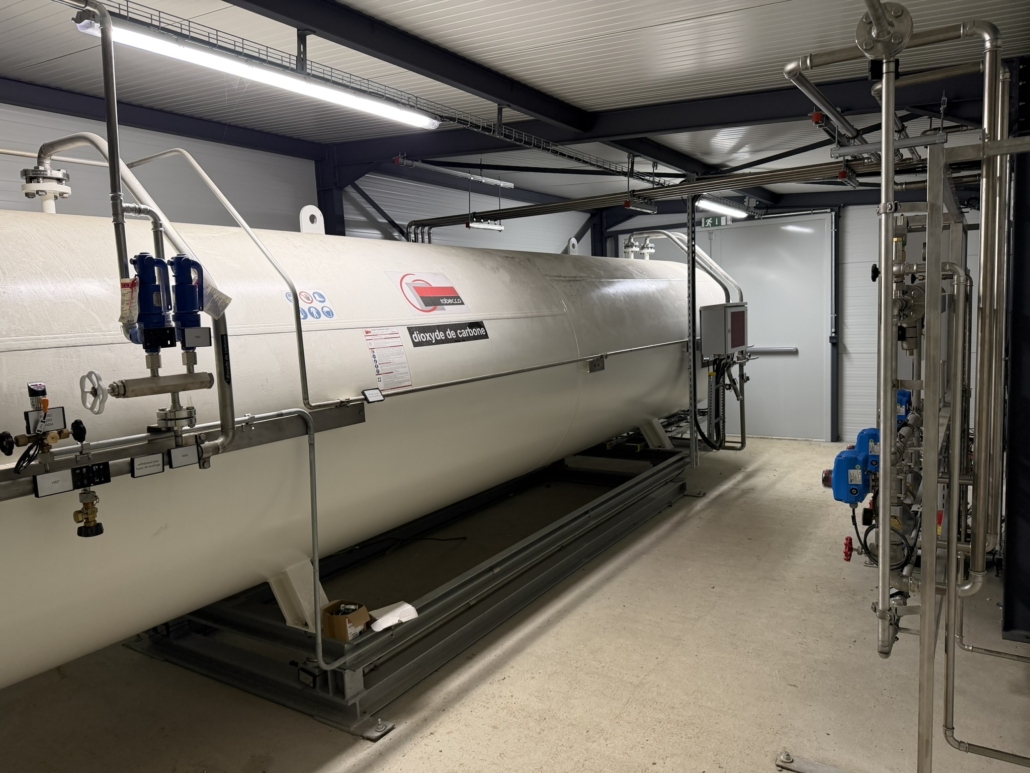
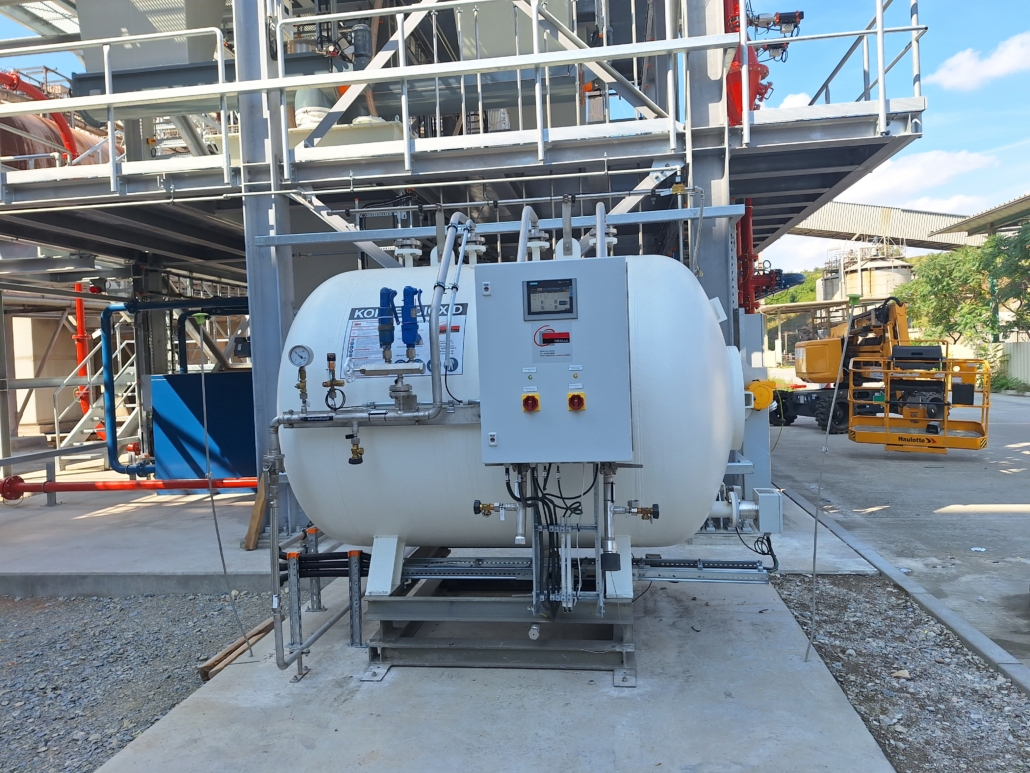
the supply method — whether N₂ cylinder bundles or a CO₂ tank (Figure 1) — depends primarily on the size of the silo to be protected and thus on the quantity stored. As a rule, this is 2 to 3 times the volume of the silo.
As a primary explosion-protection measure, inerting means, in practice, lowering the oxygen content in silos by 2–3% below the limiting oxygen concentration (LOC) in order to prevent a dust explosion. Preventive inerting (mixed inerting) is used, employing the so-called continuous-flow method, which should be initiated and monitored automatically wherever possible via intelligent software.
Given the response time this requires and the ever-present possibility of human error, manual inerting is not recommended under the inerting guidelines discussed below.
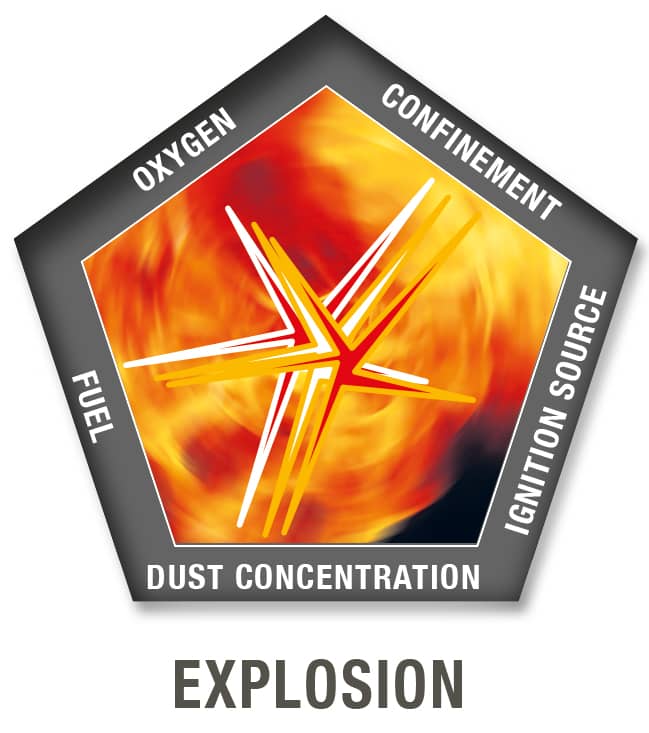
The basis for inerting combustible dusts is the so-called explosion pentagon (Figure 2). It consists of: 1. fuel, 2. oxygen, 3. ignition source, 4. enclosure (silo), and 5. an ignitable dust concentration. To prevent a dust explosion, at least one of these hazard sources must be eliminated. In the case of inerting, this means lowering the oxygen content below the limiting oxygen concentration (LOC).
To smother a glow or smouldering fire, the oxygen content must be lowered further, to 2–3 vol.%; this generally requires repeated inerting cycles. This level then has to be maintained for hours — sometimes days in the case of large silo installations — until a glow fire is completely smothered and extinguished. This calls for measures for the early detection of explosive air/dust concentrations and smouldering hot spots, for example through carbon-monoxide or CH₄ concentration measurements and temperature monitoring. The alarm and limit settings for these parameters should be firmly defined within the so-called explosion protection document in accordance with ATEX 1999/92/EC.
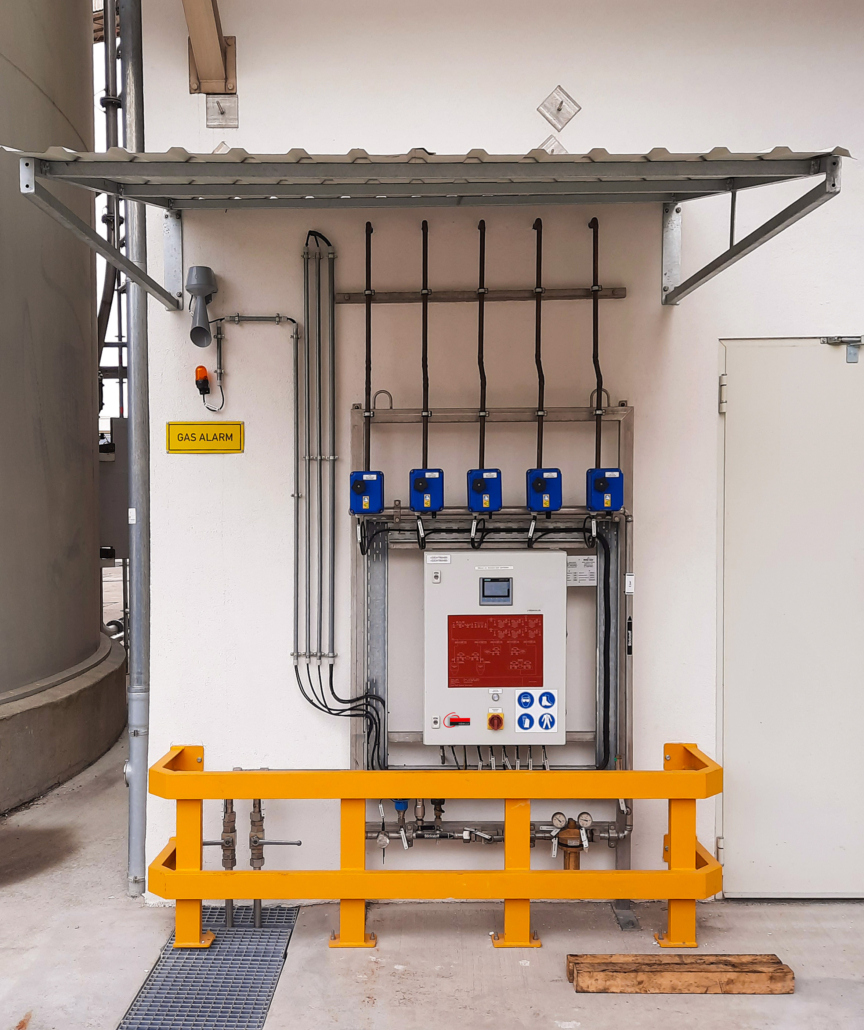
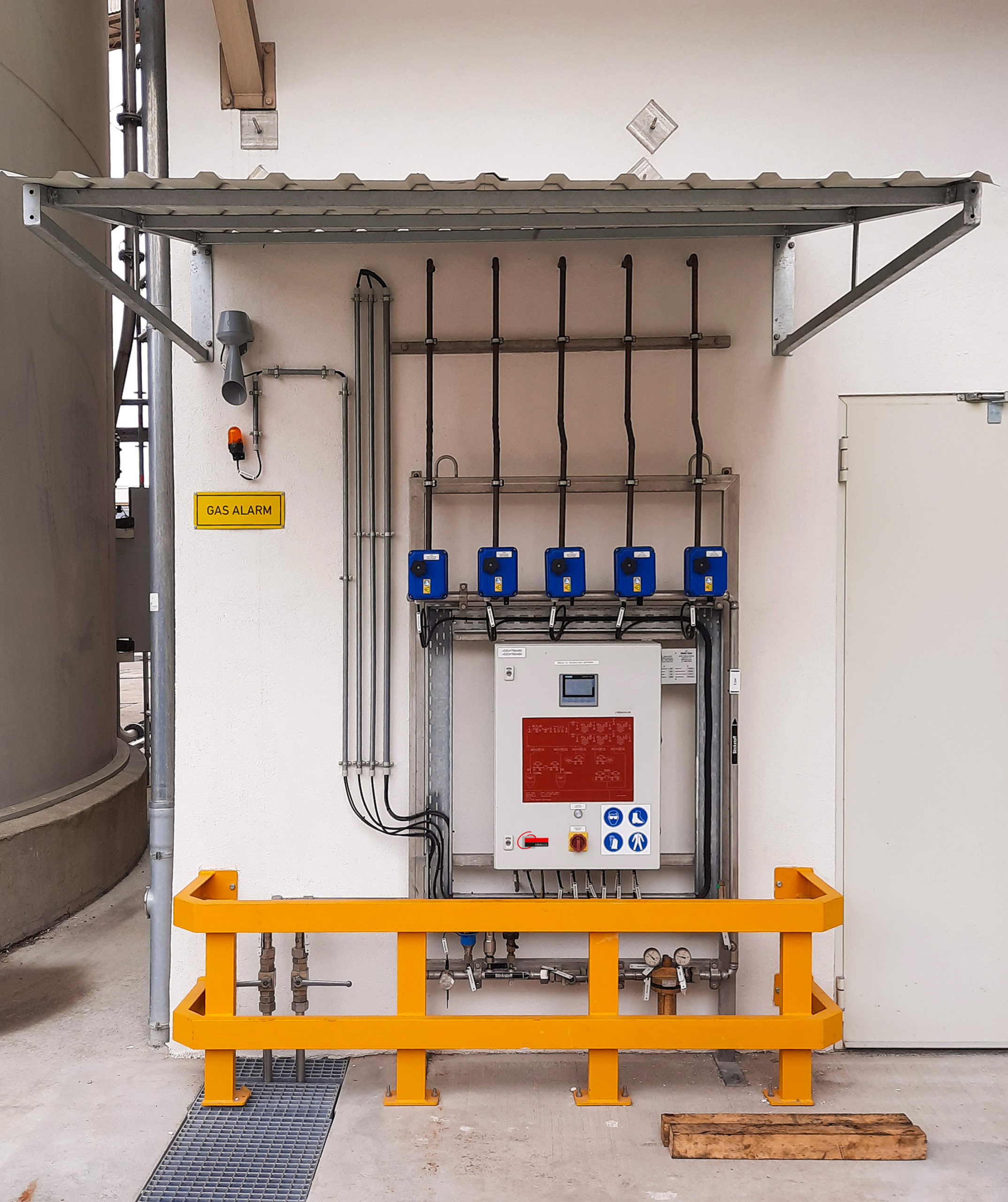
Reliable measurement, monitoring and evaluation of smouldering-fire gases such as CO and CH₄, together with corresponding O₂ measurement using extractive gas analysis systems, is a prerequisite for effective inerting. This detects hazardous situations in good time (Figure 3).
For explosion protection, the ATEX Directive 2014/34/EU applies, along with the revised guidelines for inerting CEN/TR 15281:2022 and VDI 2263-2. In addition, the DWA-M 379 fact sheet on sewage sludge drying applies. All pressure-bearing components must comply with the European Pressure Equipment Directive (PED) 2014/68/EU.
Visit us at POWTECH TECHNOPHARM, Hall 9 / Stand no. 9-359.
robecco GmbH has been developing solutions in the field of electrical engineering since 1995. One of the company’s areas of focus is systems and products for preventive explosion protection, which are continuously being further developed. Development and production of the explosion-protection solutions take place entirely at the company’s site in Horhausen. All engineering services, as well as the manufacturing and testing of the systems, are likewise carried out in-house.
In addition to its international explosion-protection business, robecco is also active regionally and nationally in building services engineering and electrical installation.